 Add to Chrome
 Add to Firefox
 Add to Edge
Driver-WM: A Driver-Centric Traffic-Conditioned Latent World Model for In-Cabin Dynamics Rollout
May 06, 2026
Safe L2/L3 driving automation requires anticipating human-in-the-loop reactions during shared-control transitions. While most driving world models forecast the external environment, in-cabin intelligence remains strictly recognition-oriented and lacks multi-step rollout capabilities for driver dynamics. We introduce Driver-WM, a driver-centric latent world model that rolls out in-cabin dynamics causally conditioned on out-cabin traffic context. This formulation unifies physical kinematics forecasting with auxiliary behavioral and emotional semantic recognition. Operating in a compact latent space constructed from frozen vision-language features, Driver-WM adopts a dual-stream architecture to separately encode external traffic and internal driver states. These streams are directionally coupled via a gated causal injection mechanism, which uses a learned vector gate to modulate external contextual perturbations while strictly enforcing temporal causality. Evaluations on a multi-task assistive driving benchmark demonstrate that Driver-WM yields robust long-horizon geometric forecasting for reactive high-motion maneuvers and improves semantic alignment for both driver and traffic states. Finally, the explicit external-to-internal conditioning allows for controlled test-time interventions to systematically analyze mechanism responses.

AnyHand: A Large-Scale Synthetic Dataset for RGB(-D) Hand Pose Estimation
Mar 26, 2026We present AnyHand, a large-scale synthetic dataset designed to advance the state of the art in 3D hand pose estimation from both RGB-only and RGB-D inputs. While recent works with foundation approaches have shown that an increase in the quantity and diversity of training data can markedly improve performance and robustness in hand pose estimation, existing real-world-collected datasets on this task are limited in coverage, and prior synthetic datasets rarely provide occlusions, arm details, and aligned depth together at scale. To address this bottleneck, our AnyHand contains 2.5M single-hand and 4.1M hand-object interaction RGB-D images, with rich geometric annotations. In the RGB-only setting, we show that extending the original training sets of existing baselines with AnyHand yields significant gains on multiple benchmarks (FreiHAND and HO-3D), even when keeping the architecture and training scheme fixed. More impressively, the model trained with AnyHand shows stronger generalization to the out-of-domain HO-Cap dataset, without any fine-tuning. We also contribute a lightweight depth fusion module that can be easily integrated into existing RGB-based models. Trained with AnyHand, the resulting RGB-D model achieves superior performance on the HO-3D benchmark, showing the benefits of depth integration and the effectiveness of our synthetic data.
Toward Generalist Neural Motion Planners for Robotic Manipulators: Challenges and Opportunities
Mar 25, 2026State-of-the-art generalist manipulation policies have enabled the deployment of robotic manipulators in unstructured human environments. However, these frameworks struggle in cluttered environments primarily because they utilize auxiliary modules for low-level motion planning and control. Motion planning remains challenging due to the high dimensionality of the robot's configuration space and the presence of workspace obstacles. Neural motion planners have enhanced motion planning efficiency by offering fast inference and effectively handling the inherent multi-modality of the motion planning problem. Despite such benefits, current neural motion planners often struggle to generalize to unseen, out-of-distribution planning settings. This paper reviews and analyzes the state-of-the-art neural motion planners, highlighting both their benefits and limitations. It also outlines a path toward establishing generalist neural motion planners capable of handling domain-specific challenges. For a list of the reviewed papers, please refer to https://davoodsz.github.io/planning-manip-survey.github.io/.
Event-Driven Proactive Assistive Manipulation with Grounded Vision-Language Planning
Mar 25, 2026Assistance in collaborative manipulation is often initiated by user instructions, making high-level reasoning request-driven. In fluent human teamwork, however, partners often infer the next helpful step from the observed outcome of an action rather than waiting for instructions. Motivated by this, we introduce a shift from request-driven assistance to event-driven proactive assistance, where robot actions are initiated by workspace state transitions induced by human--object interactions rather than user-provided task instructions. To this end, we propose an event-driven framework that tracks interaction progress with an event monitor and, upon event completion, extracts stabilized pre/post snapshots that characterize the resulting state transition. Given the stabilized snapshots, the planner analyzes the implied state transition to infer a task-level goal and decide whether to intervene; if so, it generates a sequence of assistive actions. To make outputs executable and verifiable, we restrict actions to a set of action primitives and reference objects via integer IDs. We evaluate the framework on a real tabletop number-block collaboration task, demonstrating that explicit pre/post state-change evidence improves proactive completion on solvable scenes and appropriate waiting on unsolvable ones.
SG-VLA: Learning Spatially-Grounded Vision-Language-Action Models for Mobile Manipulation
Mar 24, 2026Vision-Language-Action (VLA) models show promise for robotic control, yet performance in complex household environments remains sub-optimal. Mobile manipulation requires reasoning about global scene layout, fine-grained geometry, and high-dimensional continuous actions, making standard imitation learning insufficient. We introduce a framework for learning spatially-grounded VLA models that strengthens perception and representation through auxiliary task co-training and multi-modal input enhancement. Our method addresses the challenge of controlling a 13-dimensional action space involving coordinated base motion, arm articulation, and gripper actuation. To enrich spatial understanding, the model incorporates multi-view RGB observations, depth cues, and short temporal history, providing perspectives of both global scene structure and local manipulation context. To improve representation quality, we co-train auxiliary decoders that reconstruct interpretable intermediate signals - including global robot position, joint configurations, grasp affordances, target-object relative pose, and segmentation masks - from shared visual-language features. These objectives provide dense supervision that encourages the backbone to develop spatially grounded, manipulation-aware latent representations. Through extensive evaluation on home rearrangement tasks, our approach achieves consistent improvements across picking, placing, opening, and closing operations, substantially outperforming direct imitation learning. Our findings suggest that spatial grounding through auxiliary and multi-modal learning provides a strong direction for scaling VLA models toward general-purpose domestic robots.
Learning Physical Principles from Interaction: Self-Evolving Planning via Test-Time Memory
Feb 23, 2026Reliable object manipulation requires understanding physical properties that vary across objects and environments. Vision-language model (VLM) planners can reason about friction and stability in general terms; however, they often cannot predict how a specific ball will roll on a particular surface or which stone will provide a stable foundation without direct experience. We present PhysMem, a memory framework that enables VLM robot planners to learn physical principles from interaction at test time, without updating model parameters. The system records experiences, generates candidate hypotheses, and verifies them through targeted interaction before promoting validated knowledge to guide future decisions. A central design choice is verification before application: the system tests hypotheses against new observations rather than applying retrieved experience directly, reducing rigid reliance on prior experience when physical conditions change. We evaluate PhysMem on three real-world manipulation tasks and simulation benchmarks across four VLM backbones. On a controlled brick insertion task, principled abstraction achieves 76% success compared to 23% for direct experience retrieval, and real-world experiments show consistent improvement over 30-minute deployment sessions.
TouchGuide: Inference-Time Steering of Visuomotor Policies via Touch Guidance
Jan 28, 2026Fine-grained and contact-rich manipulation remain challenging for robots, largely due to the underutilization of tactile feedback. To address this, we introduce TouchGuide, a novel cross-policy visuo-tactile fusion paradigm that fuses modalities within a low-dimensional action space. Specifically, TouchGuide operates in two stages to guide a pre-trained diffusion or flow-matching visuomotor policy at inference time. First, the policy produces a coarse, visually-plausible action using only visual inputs during early sampling. Second, a task-specific Contact Physical Model (CPM) provides tactile guidance to steer and refine the action, ensuring it aligns with realistic physical contact conditions. Trained through contrastive learning on limited expert demonstrations, the CPM provides a tactile-informed feasibility score to steer the sampling process toward refined actions that satisfy physical contact constraints. Furthermore, to facilitate TouchGuide training with high-quality and cost-effective data, we introduce TacUMI, a data collection system. TacUMI achieves a favorable trade-off between precision and affordability; by leveraging rigid fingertips, it obtains direct tactile feedback, thereby enabling the collection of reliable tactile data. Extensive experiments on five challenging contact-rich tasks, such as shoe lacing and chip handover, show that TouchGuide consistently and significantly outperforms state-of-the-art visuo-tactile policies.
Advances and Innovations in the Multi-Agent Robotic System (MARS) Challenge
Jan 26, 2026Recent advancements in multimodal large language models and vision-languageaction models have significantly driven progress in Embodied AI. As the field transitions toward more complex task scenarios, multi-agent system frameworks are becoming essential for achieving scalable, efficient, and collaborative solutions. This shift is fueled by three primary factors: increasing agent capabilities, enhancing system efficiency through task delegation, and enabling advanced human-agent interactions. To address the challenges posed by multi-agent collaboration, we propose the Multi-Agent Robotic System (MARS) Challenge, held at the NeurIPS 2025 Workshop on SpaVLE. The competition focuses on two critical areas: planning and control, where participants explore multi-agent embodied planning using vision-language models (VLMs) to coordinate tasks and policy execution to perform robotic manipulation in dynamic environments. By evaluating solutions submitted by participants, the challenge provides valuable insights into the design and coordination of embodied multi-agent systems, contributing to the future development of advanced collaborative AI systems.
LARM: A Large Articulated-Object Reconstruction Model
Nov 14, 2025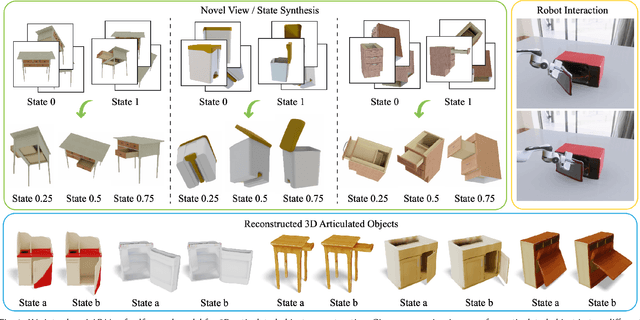
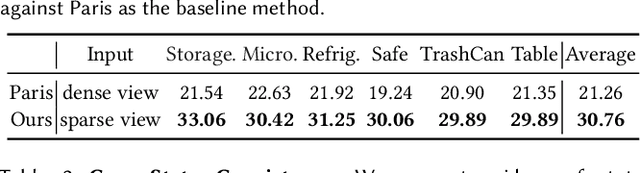
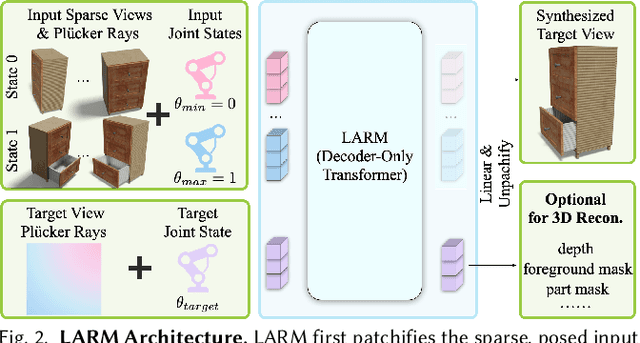
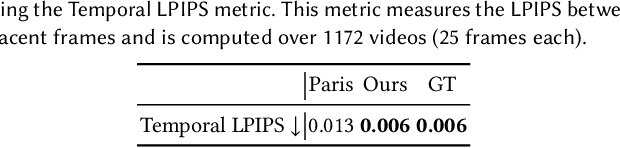
Modeling 3D articulated objects with realistic geometry, textures, and kinematics is essential for a wide range of applications. However, existing optimization-based reconstruction methods often require dense multi-view inputs and expensive per-instance optimization, limiting their scalability. Recent feedforward approaches offer faster alternatives but frequently produce coarse geometry, lack texture reconstruction, and rely on brittle, complex multi-stage pipelines. We introduce LARM, a unified feedforward framework that reconstructs 3D articulated objects from sparse-view images by jointly recovering detailed geometry, realistic textures, and accurate joint structures. LARM extends LVSM a recent novel view synthesis (NVS) approach for static 3D objects into the articulated setting by jointly reasoning over camera pose and articulation variation using a transformer-based architecture, enabling scalable and accurate novel view synthesis. In addition, LARM generates auxiliary outputs such as depth maps and part masks to facilitate explicit 3D mesh extraction and joint estimation. Our pipeline eliminates the need for dense supervision and supports high-fidelity reconstruction across diverse object categories. Extensive experiments demonstrate that LARM outperforms state-of-the-art methods in both novel view and state synthesis as well as 3D articulated object reconstruction, generating high-quality meshes that closely adhere to the input images. project page: https://sylviayuan-sy.github.io/larm-site/
FreeArt3D: Training-Free Articulated Object Generation using 3D Diffusion
Oct 29, 2025Articulated 3D objects are central to many applications in robotics, AR/VR, and animation. Recent approaches to modeling such objects either rely on optimization-based reconstruction pipelines that require dense-view supervision or on feed-forward generative models that produce coarse geometric approximations and often overlook surface texture. In contrast, open-world 3D generation of static objects has achieved remarkable success, especially with the advent of native 3D diffusion models such as Trellis. However, extending these methods to articulated objects by training native 3D diffusion models poses significant challenges. In this work, we present FreeArt3D, a training-free framework for articulated 3D object generation. Instead of training a new model on limited articulated data, FreeArt3D repurposes a pre-trained static 3D diffusion model (e.g., Trellis) as a powerful shape prior. It extends Score Distillation Sampling (SDS) into the 3D-to-4D domain by treating articulation as an additional generative dimension. Given a few images captured in different articulation states, FreeArt3D jointly optimizes the object's geometry, texture, and articulation parameters without requiring task-specific training or access to large-scale articulated datasets. Our method generates high-fidelity geometry and textures, accurately predicts underlying kinematic structures, and generalizes well across diverse object categories. Despite following a per-instance optimization paradigm, FreeArt3D completes in minutes and significantly outperforms prior state-of-the-art approaches in both quality and versatility.